Winter in Dublin carries a quiet charm that’s both restrained and warm. The morning streets are tinged with mist, and dusk is softly lit by warm, glowing lights. In this season of gathering chill, I chose to explore the very heart of Dublin, discovering its most iconic districts on foot: Temple Bar, the area around St. Stephen’s Green, Grafton Street, and the zone encompassing George’s Street and Christ Church. This winter stroll gave me a more three-dimensional understanding of the city and revealed its unique rhythm—a blend of tradition and modernity, vibrancy and tranquility.
1. Temple Bar: The Soul of Dublin’s Nightlife
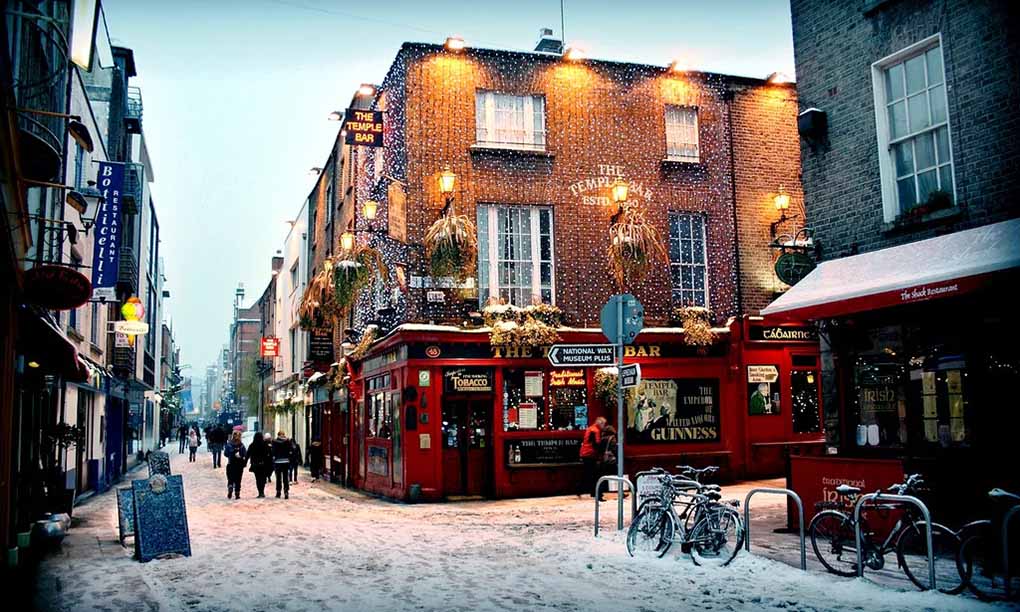
On a crisp and slightly chilly evening, I followed the River Liffey into Temple Bar. The sun sets early in winter, and as the sky turned dusky, pubs on both sides of the cobbled streets lit up with warm, amber lights spilling out from their windows, painting a romantic picture of old Dublin at night. The uneven cobblestones underfoot, coupled with the slight fog rolling in from the river, gave the whole neighborhood a timeless, cinematic charm.
Outside The Temple Bar Pub, crowds of locals and tourists had already gathered. Some chatted softly over pints of stout, others swayed gently to the music of street performers strumming guitars and singing familiar Irish tunes. The air was filled with the scent of roasted chestnuts from a nearby vendor and the occasional waft of pipe smoke. Though the temperature was low, the festive, convivial air made the cold feel distant. I stepped into a traditional pub where the bartender expertly poured a pint of Guinness—the creamy head smooth like whipped cream, perfectly balanced atop the dark, velvety stout. Inside, laughter and conversation buzzed against the backdrop of traditional Irish folk tunes, complete with fiddles, accordions, and even the rhythmic tapping of an occasional bodhrán drum.
Temple Bar isn’t just about drinking—it’s also a cultural hub. The area houses numerous galleries, small theaters, and cultural centers like the Irish Film Institute and the Project Arts Centre. It’s easy to stumble into a poetry reading, experimental art show, or live folk music session just by walking around. One winter evening, I was lucky to catch a short film screening—a documentary about fishermen on Ireland’s coast. It was raw and touching, portraying the harsh beauty of life along the Atlantic. Watching it with a small, attentive audience in a cozy theater, I gained a deeper appreciation for Dublin’s connection to its rural, maritime heritage.
2. Around St. Stephen’s Green: Winter Calm and Elegance
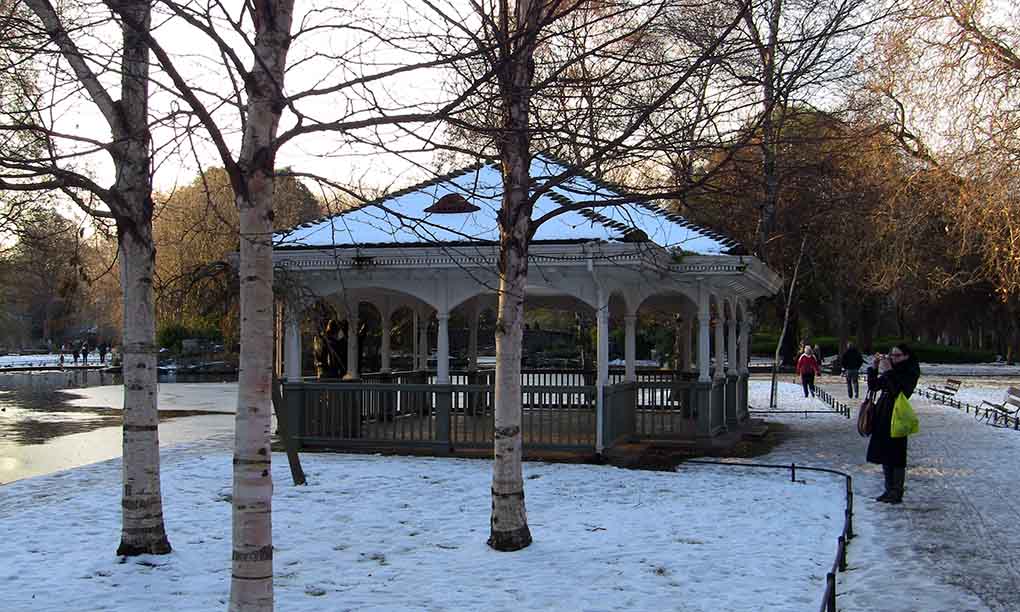
Early the next morning, before the sky had fully brightened, I walked into St. Stephen’s Green. This city-center park takes on a particularly serene character in winter. Frost covered the lawns like a silvery blanket, and the lake had a thin layer of ice. A few waterfowl wandered near the edges, pecking at the frozen ground, while squirrels darted between bare-branched trees in search of buried treats. The soft crunch of frost beneath my boots was the only sound in the stillness, aside from the occasional chirp of a robin.
Surrounding the park are classic Georgian buildings—neatly aligned redbrick townhouses with English-style sash windows, ornate doorways, and wrought iron balconies adorned with winter ivy. Nearby stands the St. Stephen’s Green Shopping Centre, a mall with a Victorian glass dome and arched windows that flood the interior with natural light during the day. I’m not one for shopping malls, but I couldn’t deny the appeal of its holiday decorations—green and red lights, metallic snowflakes hanging from above, and Christmas carols floating around the spiral staircases filled the space with warmth and whimsy. Families took selfies under garlands, and cheerful shoppers carried bags brimming with seasonal goodies.
Several museums in this area are well worth a visit. My favorite was the National Museum of Ireland – Archaeology, an ideal indoor refuge from the cold. Stepping inside felt like entering a different world—a journey through time. The exhibits include an array of Celtic-era artifacts such as the famed Ardagh Chalice and Tara Brooch—so exquisite it’s hard to believe they’re thousands of years old. Their intricate designs, gleaming in soft museum lighting, speak volumes about the craftsmanship and culture of ancient Ireland. Other rooms display Viking relics, medieval weaponry, and bog bodies preserved in Ireland’s peatlands, offering a haunting yet fascinating glimpse into the island’s layered past.
3. Grafton Street: A Winter Holiday Stage
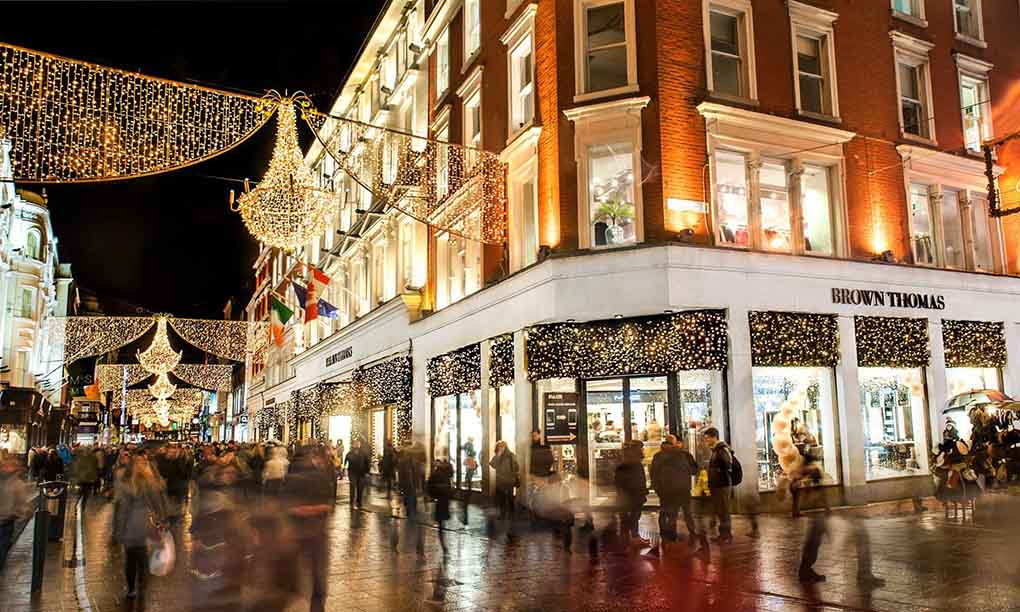
If you want to feel the festive spirit of a Dublin winter, look no further than Grafton Street. Starting in late November, this pedestrian shopping street transforms into a dazzling canvas of holiday decorations. Each shop competes for the most imaginative displays—twinkling lights, oversized ornaments, and seasonal animations fill every window. Brown Thomas’ holiday windows are the crown jewel, attracting large crowds who pause, smile, and take photos under the glowing facades. The entire street feels like a scene from a Christmas storybook.
As I strolled leisurely down the cobbled path, lined with both international brands and unique local boutiques, I passed a vibrant collection of street performers. Some played jazzy saxophone riffs, others strummed acoustic guitars with indie flair. But the one that truly moved me was an elderly violinist standing near a lamppost, playing “Silent Night” with incredible tenderness. The soft melody floated through the frosty air, lingering like a memory.
Though the street was bustling, it never felt overwhelming. Shoppers moved with cheerful energy, holding bags adorned with red ribbons, sipping warm drinks, and exchanging laughter. I ducked into Butlers Chocolates for a steaming cup of rich hot cocoa—velvety, fragrant, and satisfying. Standing by the window watching the crowds pass, I felt wrapped in warmth. Grafton Street in winter strikes a delicate balance between joyful celebration and poetic serenity. It hums with life, but always leaves room for a quiet breath, a moment of stillness, and the magic of a Dublin winter evening.
4. George’s Street and Christ Church: Where History Meets Hip
My final stop—and the one that lingered longest in my memory—was the area surrounding George’s Street and Christ Church Cathedral. This part of Dublin seamlessly blends the sacred and the contemporary. It’s a place where centuries-old stone walls coexist with hip cafés and designer storefronts. In winter, this contrast feels even sharper and more beautiful, as fog blurs the lines between history and present-day life, creating a sense of timeless wonder.
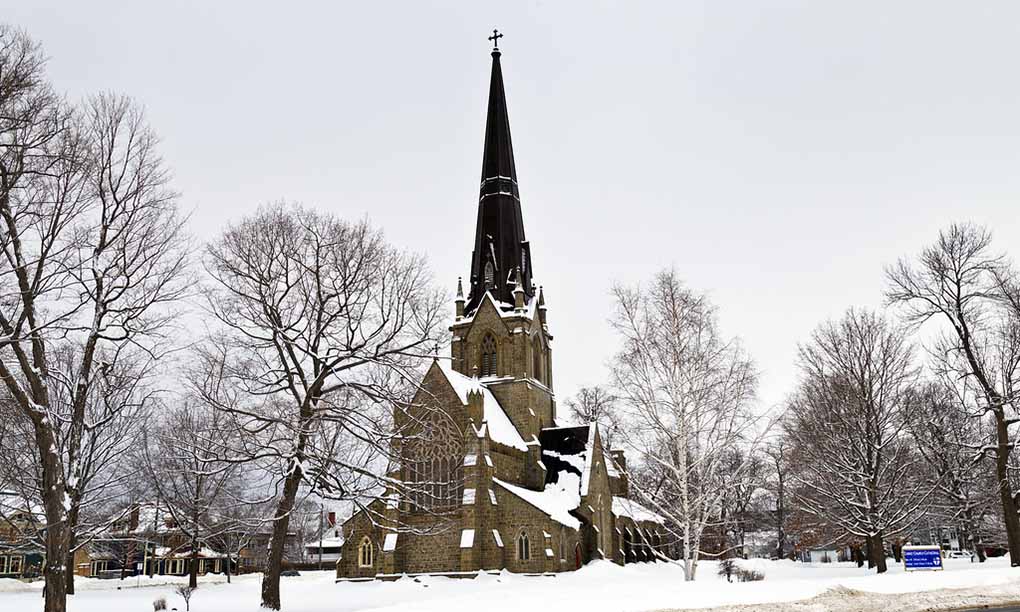
Christ Church Cathedral, its Gothic silhouette cloaked in morning mist, stood with solemn grandeur. Walking into this 11th-century structure just as the bells began to chime was nothing short of cinematic. The echoing tones vibrated under the vaulted ceilings, inviting reverence. Inside, I marveled at the intricate stained glass windows, the cold hush of ancient stone, and the hushed footsteps of fellow visitors. In the underground crypt—spacious, arched, and atmospheric—I discovered medieval artifacts, silver chalices, and the famed mummified cat and mouse, said to be found trapped in an organ pipe, locked in their eternal chase. It was eerie, oddly poetic, and wholly unforgettable.
Just a short walk from the cathedral, George’s Street offers a complete change in tone. Buzzing with local flair, it’s lined with cozy cafés, independent bookstores, vintage clothing shops, and colorful eateries. Even on chilly days, the George’s Street Arcade remained warm and full of life under its retro glass ceiling. The aroma of roasting coffee beans mixed with the scent of beeswax candles and baked goods from nearby stalls. I browsed handmade jewelry and bought a small watercolor painting of Dublin’s skyline from a local artist. At Blazing Salads, I tried a fresh vegan quinoa salad, full of bright flavors—a welcome contrast to the usual heavy winter fare.
As night fell, the area took on yet another identity. The George, a beloved LGBTQ+ bar, burst to life with music, drag shows, and dance floors bathed in rainbow lights. Despite the chill outside, the atmosphere was full of warmth, laughter, and community. The clink of glasses, glittering makeup, and friendly conversation made it feel like a celebration of life itself. In this district where history meets hip, I found the perfect end to my winter exploration—something sacred, something vibrant, and entirely Dublin.
Dublin in Winter: A City for Walkers
Despite the chilly air, Dublin in winter is not buried in snow or plagued by harsh weather—it’s an ideal season for walking. These four districts, each with its distinct charm, are tightly woven into the fabric of the city. From the evening glow of Temple Bar to the peaceful green of the city park, from Grafton Street’s holiday bustle to the solemn grandeur of a medieval cathedral, every step brought me closer to the soul of Dublin.
I’ve always believed that to understand a city, you need to walk through its daily life—not just tick off attractions. Dublin’s core is the beating heart that connects its past to its present, and its culture to its everyday rhythms. This winter, I walked tens of kilometers, sipped countless warm drinks, and collected endless memories.
Tags: George’s Street, Grafton Street, St. Stephen's Green, Temple Bar